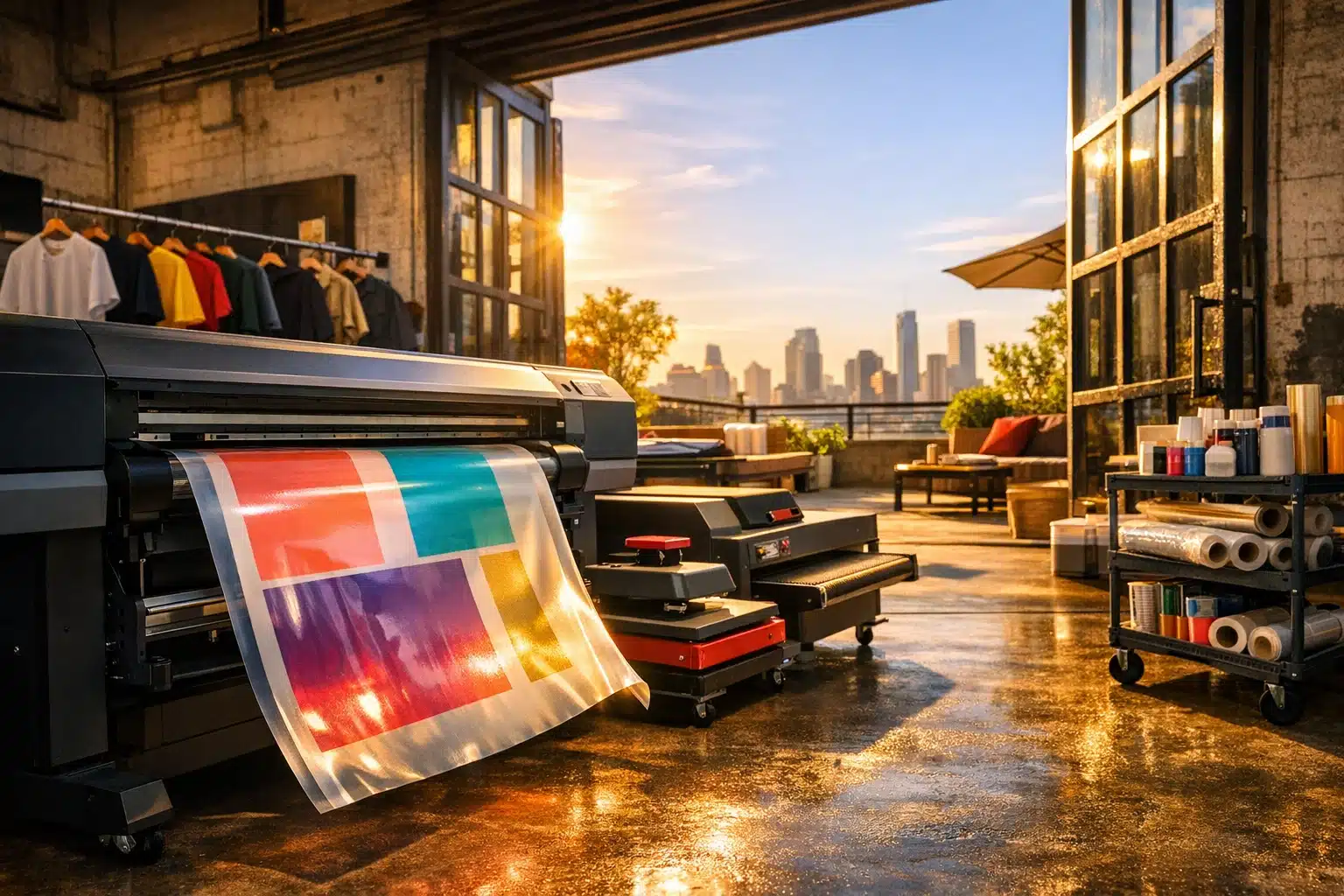
Rent-to-Own DTF Printers: What to Know Before You Choose
Rent-to-own DTF printers sit at an interesting crossroads where production ambition meets cash-flow reality. For a startup apparel brand, a home-based print shop, or an established decorator adding film transfers, the appeal is easy to understand: get equipment now and spread the cost over time. Yet the simplest offer on paper is not always the smartest deal in practice. Terms, service, consumables, and exit options can quietly decide whether the arrangement supports growth or squeezes margins.
Outline
1. Understanding how rent-to-own DTF printer programs work and who they suit.
2. Comparing costs, cash flow, and total ownership expenses against buying or leasing.
3. Evaluating printer specifications, workflow needs, and production fit before committing.
4. Reviewing contract terms, service promises, and common pitfalls that raise risk.
5. A practical conclusion for startups and growing print shops deciding whether rent-to-own is the right move.
Understanding How Rent-to-Own DTF Printer Programs Work
A rent-to-own DTF printer arrangement is usually designed for businesses that need equipment now but cannot, or prefer not to, pay the full purchase price upfront. DTF, short for direct-to-film, is a printing process in which artwork is printed onto a special film, coated with adhesive powder, cured with heat, and then transferred onto garments or other compatible materials. Because the method works on cotton, polyester, blends, and many dark fabrics, it has become attractive to small decorators that want flexibility without building separate workflows for multiple garment types.
In a rent-to-own model, the provider supplies the printer and often bundles related equipment such as a shaker, curing unit, RIP software, starter inks, or training. The customer then pays in scheduled installments, commonly monthly, until ownership transfers at the end of the term. That sounds straightforward, but not every program is structured the same way. Some agreements behave like financing with a clear buyout amount. Others resemble equipment rental with an option to purchase later. The difference matters because it changes the total cost, the legal obligations, and what happens if the machine underperforms.
A typical offer may include:
• The printer and core hardware
• Delivery and setup
• Basic training for operation and maintenance
• A limited service or support window
• A set term, such as 12, 24, 36, or 48 months
• A final ownership transfer condition or buyout payment
Rent-to-own can be especially appealing for a shop testing a new revenue stream. Imagine a small embroidery business that is losing orders because customers also want full-color logos on performance wear. Buying a DTF system outright may feel too risky, yet outsourcing every transfer reduces margins and slows turnaround. A rent-to-own program can bridge that gap, letting the shop bring production in-house while protecting short-term cash flow.
Still, the machine itself is only the visible part of the orchestra. DTF production also depends on white ink circulation, proper humidity, software reliability, consistent film and powder, and regular maintenance. If a provider advertises easy ownership but does not explain service response times, consumable compatibility, or the exact path to ownership, the arrangement may be less helpful than it first appears. The best way to view rent-to-own is not as a shortcut, but as a financing and operations decision wrapped into one package. When you judge it through both lenses, the picture becomes far clearer.
Comparing Rent-to-Own With Buying Outright and Traditional Leasing
The main reason businesses consider rent-to-own is cash flow. A DTF setup can represent a meaningful investment, and the total price varies widely based on print width, automation level, bundled equipment, and software. Entry-level systems may start in the lower thousands, while more capable commercial packages can quickly move well beyond that. For many small shops, the question is not whether the printer could eventually pay for itself, but whether the business can carry the cost comfortably in the months before that happens.
Buying outright usually produces the lowest long-term cost if the shop has the capital and enough confidence in demand. There are no financing premiums, and ownership is immediate. That can make sense for established decorators with stable order volume, strong working capital, and the ability to absorb maintenance costs. The drawback is obvious: cash tied up in equipment is cash not available for blank garments, payroll, marketing, or unexpected repairs.
Traditional leasing spreads payments over time and may offer business-friendly terms, but many leases are written through finance companies rather than equipment specialists. That means the payment structure may be clear while the support structure is not. Rent-to-own often sits somewhere in the middle. It tends to be easier to access than some bank-backed financing, and it may feel more approachable for startups. However, convenience can come at a premium.
Consider a simplified example. If a bundled DTF package has a cash price of $7,000 and a rent-to-own offer is $350 per month for 30 months, the total paid becomes $10,500 before taxes, shipping, consumables, or extra service charges. That does not automatically make the deal bad. If the machine helps a shop generate new revenue quickly, the higher total may be acceptable. But the business should recognize that the financing cost is real, not hidden magic.
When comparing options, look beyond the monthly number and calculate total cost of ownership. Include:
• Equipment price or financed total
• Interest or financing premium
• White and CMYK ink usage
• Film and powder consumption
• Printhead maintenance supplies
• Heat press or curing equipment if not included
• Downtime risk and service costs
• Training time and operator learning curve
DTF can deliver strong margins on short runs, gang sheets, and on-demand orders, but only if waste stays under control. A shop that prints inconsistently, stores ink poorly, or underestimates maintenance may find that the monthly payment is just one line in a much longer expense story. Comparing rent-to-own, outright purchase, and leasing means asking a very practical question: which path gives the business the best mix of flexibility, affordability, and operational stability over the life of the machine, not just over the next few weeks.
How to Evaluate the Printer, Workflow, and Real Production Needs
Before signing any rent-to-own agreement, it helps to step back and ask a slightly uncomfortable question: what exactly do you need this printer to do every week? Many purchasing mistakes happen because buyers shop for a machine before they define the workflow. DTF is versatile, but versatility does not erase the difference between a side business producing a few gang sheets per day and a busy shop turning out hundreds of transfers across multiple garment lines.
Start with expected production volume. If your current order flow is modest, a smaller setup may be enough, especially if the machine is intended to supplement existing services rather than replace them. On the other hand, if you already have strong local demand from schools, workwear clients, sports teams, or ecommerce apparel orders, a lighter-duty system may become a bottleneck almost immediately. Choosing too small a machine can be just as costly as choosing too large a one, because delays, reprints, and missed deadlines quietly eat profit.
Print quality also deserves careful attention. Ask for sample transfers on fabrics similar to the ones you plan to sell. Look for sharp detail, smooth gradients, good white underbase coverage, wash resistance, and soft hand where possible. DTF can be impressive when dialed in correctly, but quality depends on the entire chain, not only the printer head. Film, powder, curing consistency, humidity, software settings, and press technique all influence the result.
Here are practical evaluation points to compare:
• Print width and daily output capacity
• Availability of automatic white ink circulation
• Included RIP software and color management features
• Compatibility with common film and powder products
• Cleaning routines and expected maintenance frequency
• Local versus remote technical support
• Replacement part availability and lead times
It is also wise to consider the workspace itself. DTF printers need a reasonably controlled environment. Temperature swings, high dust levels, and poor humidity management can create clogs, adhesion issues, or inconsistent curing. A provider that skips these details during the sales conversation may be selling the dream rather than preparing the buyer for production reality. In a well-run shop, the printer is not a magic box humming alone in the corner; it is part of a living workflow that includes design prep, printing, powder application, curing, pressing, packing, and quality control.
One more comparison matters: converted or improvised systems versus purpose-built equipment. Lower-cost options can be tempting, especially under a rent-to-own structure that lowers the entry barrier even further. But if the system has limited support, fragile workflows, or inconsistent parts availability, the monthly payment can become an ongoing reminder that cheap and affordable are not always the same thing. The right machine is the one that fits your order profile, your staff skill level, and your ability to keep production steady when the schedule gets crowded.
Contract Terms, Service Promises, and Common Pitfalls to Watch Closely
The most important page in a rent-to-own offer is often the one buyers skim too fast. Contracts for equipment can contain details that change the value of the deal far more than a glossy product sheet ever will. A printer may look perfect in a demo video, but if the agreement is vague on service, restrictive on supplies, or costly to exit, the arrangement can become frustrating very quickly.
Start with the ownership path. Does the contract clearly state when you become the legal owner of the printer? Is ownership automatic after the final scheduled payment, or is there an extra buyout amount due at the end? Some agreements include a nominal final payment, while others require a larger balloon payment that catches buyers off guard. Make sure the ownership terms are written in plain language and not implied through sales talk.
Next, examine the maintenance and support commitments. DTF printers can be productive tools, but they are not maintenance-free. Printhead issues, white ink settling, clogged lines, curing problems, and software errors can interrupt production. If a shop depends on the machine for daily output, service delays are not minor annoyances; they can become lost revenue. Ask direct questions about response times, remote troubleshooting, replacement parts, and whether labor is covered.
Other contract details worth checking include:
• Early payoff options and whether there is a penalty
• Late fees, default terms, and repossession rights
• Requirements to use approved inks, films, or powders
• Warranty coverage and what voids it
• Shipping responsibilities for repairs or replacement parts
• Insurance requirements during the agreement term
• Automatic renewal clauses or renewal notice deadlines
Consumable lock-in is another issue that deserves real attention. Some providers bundle excellent support with approved supplies, which can be reasonable if pricing stays competitive and quality remains consistent. Others use supply restrictions to create a long tail of higher operating costs. If you must buy film, powder, or ink only from the vendor, ask for current pricing in writing and compare it against market averages. A lower monthly machine payment can be offset by unusually expensive consumables.
Also pay attention to what happens if the printer does not suit your business after a few months. Can you upgrade to a larger unit? Is there a trade-in path? Can the contract be transferred if you sell the business? These questions may feel premature, but they matter because real businesses change direction. Demand grows, margins shift, staff turns over, and product mixes evolve.
A good provider welcomes precise questions. In fact, the quality of the answers often tells you as much as the machine specifications do. If the conversation becomes slippery when you ask about total paid, service limits, or end-of-term ownership, step back. In equipment finance, clarity is not a luxury. It is part of the product.
Conclusion for Small Shops, Startups, and Growing Decorators
For the right business, a rent-to-own DTF printer can be a practical way to begin or expand apparel decoration without exhausting available cash. That is the central appeal, and it is a real one. A shop that already has dependable demand, understands the DTF workflow, and chooses a transparent provider may find that spreading the cost over time is worth the premium. In that setting, the arrangement can help bring production in-house, shorten turnaround, and improve control over quality and scheduling.
But rent-to-own is not automatically the safest or cheapest route. It works best when the buyer approaches it with both creative ambition and financial discipline. If your order flow is still uncertain, your workspace is not ready, or the contract leaves basic questions unanswered, the flexibility you expect may not materialize. In some cases, outsourcing transfers for a period, buying a smaller system outright, or securing a more conventional financing option may produce a better result.
If you are trying to decide, focus on a short decision framework:
• Do you have enough recurring demand to justify regular payments?
• Have you calculated the total paid over the full term?
• Does the provider offer support that matches your production risk?
• Can your team handle maintenance, color management, and pressing workflow?
• Are the consumable costs sustainable month after month?
• Is the ownership path clear and documented?
For startups, the smartest move is often to be honest about volume. It is easy to imagine future orders when a new machine enters the picture, and every print business knows the thrill of possibility. Yet healthy growth usually comes from measured decisions, not from equipment that outruns the market. For established shops, the question is slightly different: will this machine add profitable capacity, or just add another payment attached to another process that needs daily attention?
In the end, choosing a rent-to-own DTF printer is less about chasing a trend and more about matching financing to operations. When the numbers make sense, the workflow fits, and the contract is clear, rent-to-own can be a useful business tool. When those pieces do not line up, the printer may still print beautifully while the deal itself proves expensive. The right choice is the one that keeps your shop productive, your margins visible, and your next step grounded in evidence rather than excitement alone.