Top Engagement Ring Styles: A Guide to Popular Designs
Outline and Why Engagement Ring Styles Matter
An engagement ring is a small object with an unusually large job: it carries taste, symbolism, budget, and everyday practicality all at once. Because it may be worn for decades, the style you choose should feel beautiful on day one and still make sense years later, whether your taste leans classic, vintage, or strikingly modern. That is why understanding the most popular engagement ring styles matters before you compare stones, settings, and metals.
Style affects much more than appearance. A halo can make a center stone look visually larger, a bezel can protect vulnerable edges, and a high cathedral profile can feel elegant while still being less convenient for gloves, pockets, or active hands. In other words, the design is not just decoration around a gem; it is the structure that shapes how the ring lives with you. Buyers often focus first on carat weight or stone shape, yet the setting is what turns a loose stone into a daily object with personality and function.
This guide is arranged as a roadmap so the subject feels less overwhelming. Rather than throwing every design name into a glittering pile, it breaks the topic into clear groups and compares how they behave in real life. Think of it as trying on ideas in your mind before you ever stand under jewelry store lighting.
Article outline:
- Classic styles that remain popular because they are versatile, elegant, and easy to pair with wedding bands.
- Symbolic and decorative styles that add story, finger coverage, and distinctive character.
- Modern and protective designs that favor clean lines, security, and practical wear.
- Metal and construction choices that influence durability, maintenance, and comfort.
- A final decision framework for choosing a style that suits lifestyle, budget, and long-term taste.
Popularity shifts from year to year, but the core categories endure because they answer different needs. Some people want the pure simplicity of a center stone and nothing else. Others want the ring to feel antique, architectural, or richly detailed. Many buyers also need a design that stands up to commuting, typing, travel, childcare, or frequent handwashing. Once you understand those trade-offs, engagement ring shopping becomes less about chasing trends and more about selecting a piece that will still feel right long after the proposal photos are tucked away.
Classic Styles That Continue to Lead the Category
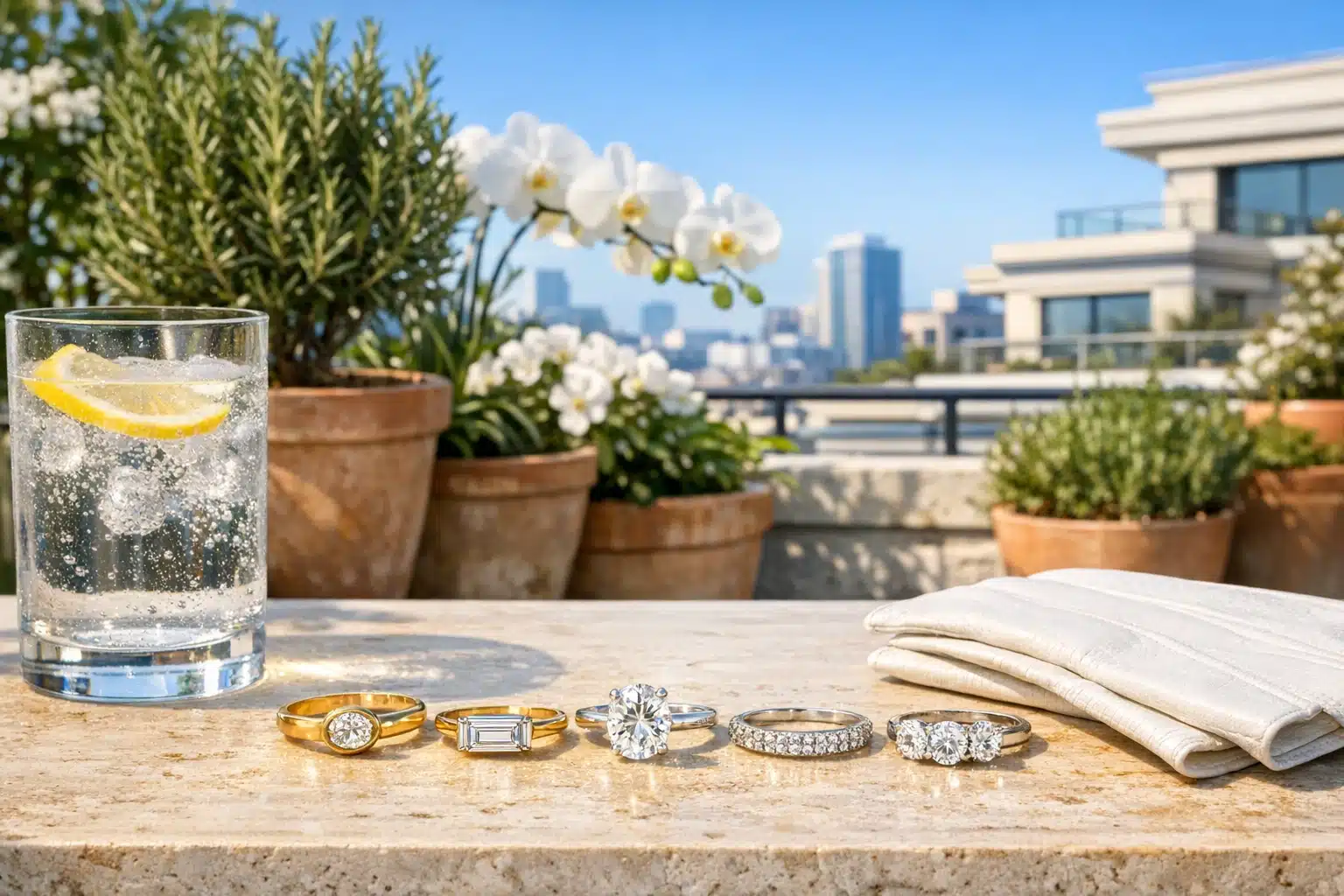
If one style could be called the anchor of the engagement ring world, it would be the solitaire. A solitaire places nearly all the visual attention on a single center stone, usually held by four or six prongs on a plain or lightly detailed band. Its appeal is easy to understand: it is clean, flexible, and hard to date. A round brilliant solitaire, in particular, remains a reference point for many shoppers because the cut is engineered for strong light return and because the minimal setting lets the stone do the talking. Round diamonds also tend to command a price premium over many fancy shapes, so a solitaire often works best when the center stone itself is the priority.
Pavé and halo styles build on that classic foundation but turn up the sparkle. In a pavé ring, tiny accent diamonds line the band, adding shimmer without changing the basic silhouette too dramatically. A halo surrounds the center stone with a border of smaller diamonds, creating more visual spread and often making the main stone appear larger than it would in a plain solitaire. That optical effect explains why halo settings remain one of the most popular choices among buyers who want maximum presence for a controlled budget. An oval or cushion center stone with a halo can look especially generous across the finger.
Cathedral settings are also common in classic designs. The band arches upward to support the center stone, which creates height and a graceful side profile. This look can be striking, but the extra elevation may snag more often than a lower setting. That is the recurring lesson with ring styles: beauty and practicality are always in conversation.
When comparing these leading styles, the differences are easier to see in everyday terms:
- Solitaire: simplest look, easiest cleaning access, strongest focus on the center stone.
- Pavé: more sparkle along the band, more detail, and slightly more maintenance over time.
- Halo: added brilliance and visual size, but a busier face-up appearance.
- Cathedral: elegant lift and profile, though not always ideal for highly active wearers.
For many people, classic styles stay on top because they balance symbolism and wearability. They also pair well with different wedding bands, from plain metal to diamond eternity bands. If you want a ring that will feel polished in ten years as easily as it does today, the classic category is usually the smartest place to begin. It may not shout across the room, but it rarely needs to. Like a perfectly cut black jacket or a song that survives every trend cycle, it earns its reputation by staying relevant without trying too hard.
Symbolic, Romantic, and Vintage-Inspired Engagement Ring Styles
Once buyers move beyond the classic shortlist, they often gravitate toward styles that tell a more personal story. Three-stone rings are a strong example. Traditionally, the trio is said to represent the past, present, and future, which gives the design emotional depth without making it sentimental in an obvious way. From a visual standpoint, three-stone rings also offer more finger coverage than a solitaire, which can make the ring appear larger overall even when the center stone size remains moderate. Tapered baguettes beside an emerald cut center create a crisp, architectural look, while pear or round side stones can soften the design and make it feel more romantic.
Vintage-inspired rings appeal to a different instinct. They draw on design details associated with earlier eras, such as milgrain edges, filigree work, engraved bands, and geometric Art Deco patterns. These rings can feel like objects with a backstory, even when they are newly made. A vintage-style ring often suits cushion, oval, or old-style round cuts beautifully because the softer lines and intricate metalwork complement one another. The trade-off is maintenance: detailed rings may collect lotion, soap residue, and everyday dust more easily than a sleek solitaire, so they reward owners who do not mind a little extra care.
Cluster rings and side-stone designs also belong in the conversation. A cluster uses several stones to create a larger face-up effect or a floral, starburst, or antique look. This can be a smart way to prioritize visual impact over a single large center gem. Side-stone rings, meanwhile, keep a clear focal point but use accent stones to guide the eye toward it. The result can feel more decorative than a solitaire without becoming as dramatic as a halo.
Another style that has gained renewed attention is the Toi et Moi ring, which places two stones side by side. The appeal is obvious: it feels intimate, unusual, and symbolic, with each stone representing a partner, a milestone, or a meaningful contrast. One stone might be a diamond and the other a sapphire, or the pair might mix shapes such as pear and emerald for a striking asymmetry.
- Three-stone: symbolic, balanced, and broader across the finger.
- Vintage-inspired: rich detail, heirloom atmosphere, and strong personality.
- Cluster: creative spread and texture, often with a softer antique mood.
- Toi et Moi: expressive, modern-romantic, and visually distinctive.
These styles suit shoppers who want the ring to say something specific. A vintage ring can feel like a letter discovered in a velvet-lined drawer, while a Toi et Moi design can feel modern in the most human way possible: two separate forms sharing one frame. If the classic styles offer clarity, these designs offer narrative, and for many couples that story is exactly what makes the ring memorable.
Modern Styles, Protective Settings, and Metal Choices That Change Everything
Modern engagement ring design often begins with a practical question: how can a ring look current while still surviving everyday life? Bezel settings answer that question well. In a bezel, a rim of metal surrounds the stone fully or partially, holding it securely and shielding vulnerable edges. This is especially useful for shapes with points or corners, such as pear, marquise, or emerald cuts. Compared with prong settings, bezels usually offer a sleeker profile and less snagging. They may show slightly less of the stone’s edge, yet many buyers gladly accept that trade for security and a polished, contemporary appearance.
East-west settings are another favorite in modern ring design. Instead of placing an elongated stone vertically, the stone sits horizontally across the finger. Ovals, emerald cuts, and marquise shapes all take on a fresh personality in this orientation. The effect is stylish without being hard to wear, which helps explain its growing appeal among people who want something recognizable but not predictable. Hidden halos fit the same impulse. From above, the ring may look relatively restrained, but from the side a circle of small diamonds sits beneath the center stone, adding sparkle in a subtler way than a traditional halo.
Split shanks, minimalist half-bezels, and tension-inspired settings also belong to the modern category. A split shank divides the band as it approaches the center stone, creating openness and drama. A true tension setting uses pressure to hold the stone, though many commercial versions are engineered with extra structural support for safety. These looks can be beautiful, but they should always be made by a reputable jeweler because precise workmanship matters more when the design depends on structural geometry.
Metal choice is just as important as style. It changes color, weight, care needs, and cost.
- Platinum is dense, naturally white, and prized for durability; it is also heavier and often more expensive.
- 14k gold contains 58.3 percent pure gold and is commonly chosen for everyday wear because it is harder than 18k gold.
- 18k gold contains 75 percent pure gold, giving it a richer color but a slightly softer feel.
- White gold offers a bright neutral look, though many pieces need rhodium replating over time to maintain that fresh white finish.
- Yellow and rose gold can flatter warm skin tones and bring vintage or modern warmth depending on the design.
Low-profile settings deserve special attention as well. They sit closer to the finger, making them easier for active wearers, medical professionals, parents with small children, and anyone who dislikes catching a ring on clothing. A high setting may create a dramatic side profile, but a low one often wins the long game. Modern styles succeed when they combine visual sharpness with sensible engineering, proving that contemporary design is not just about looking different; it is about making a ring fit real life more gracefully.
How to Choose the Right Engagement Ring Style and Final Thoughts
Choosing an engagement ring style becomes much easier when you stop asking, “What is most popular?” and start asking, “What will feel right on this hand, in this life, for many years?” A ring does not live in a display case. It travels through workdays, dinners, rainy commutes, airport security lines, holidays, and lazy weekends. Someone who works with their hands or wears gloves often may be happier with a low-profile bezel or a sturdy solitaire than with a tall cathedral halo. Someone who wants sparkle from every angle may happily trade a bit of simplicity for pavé or a hidden halo. The best decision usually sits where aesthetics and routine meet.
Hand shape and personal style also matter more than many first-time buyers expect. Elongated stones such as oval, pear, and marquise can create a lengthening effect on the finger. Round and cushion shapes often feel balanced and classic. Emerald cuts bring clean lines and a hall-of-mirrors look, but they reveal inclusions more readily than brilliant cuts, so stone quality may need extra attention. If the wearer loves tailored clothing, quiet luxury, and timeless accessories, a solitaire or three-stone ring may feel natural. If they collect antique decor, wear textured fabrics, or gravitate toward one-of-a-kind pieces, vintage-inspired styles may feel instantly at home.
Budget strategy is another powerful filter. A simple setting often allows more money to go toward the center stone. A halo can create a larger visual footprint without requiring a much larger center gem. Fancy shapes such as oval, pear, or cushion may sometimes offer better value per carat than round stones, depending on quality and market conditions. None of that means one route is objectively better; it simply means style can be used as a practical tool rather than a purely emotional choice.
Before buying, it helps to run through a short checklist:
- How active is the wearer on a typical day?
- Do they prefer clean minimalism or visible detail?
- Will the ring need to sit flush with a wedding band?
- Is stone size, symbolism, durability, or uniqueness the top priority?
- Are they comfortable with periodic maintenance such as prong checks or replating?
For couples and shoppers comparing engagement ring styles, the goal is not to find a universally perfect design because no such design exists. The real goal is to find a ring that feels convincing from every angle: visually, practically, emotionally, and financially. A great choice should still look good in ordinary daylight, still feel comfortable after a long day, and still reflect the person wearing it when trends inevitably shift again. Start with how the ring will be lived in, then let beauty narrow the final field. That approach does not drain the romance from the purchase; it gives the romance a structure strong enough to last.