Portable and Mini Swimming Pools: A Practical Guide
Portable and mini swimming pools have moved from novelty to practical backyard solution for renters, small-home owners, and families who want relief from heat without building a permanent pool. They fit modern living because space, budget, and flexibility matter as much as recreation. From inflatable plunge options to sturdy frame pools, the category now offers more variety than many buyers expect. Knowing the differences helps you choose fun that feels manageable rather than demanding.
Outline and Why Portable and Mini Pools Matter Today
Before diving into specifications, it helps to see the shape of the whole subject. This guide follows a simple path: first, it defines portable swimming pools and explains the most common formats on the market; next, it looks at mini swimming pools and why they have become popular in smaller homes and urban settings; then it compares the two in terms of cost, comfort, water use, and maintenance; finally, it covers setup, safety, and the kind of buyer each option suits best. That outline matters because many shoppers start with a vague image of “a small pool” and only later discover that portable and mini models can serve very different purposes.
Portable and mini pools are increasingly relevant because modern households often face three shared constraints: limited outdoor space, rising installation costs, and a desire for flexibility. A traditional in-ground pool can require major excavation, permits, contractors, and a budget that runs into tens of thousands of dollars. By contrast, portable pools often start in the low hundreds, while better-built mini pools and compact plunge models can still remain far below the cost of a permanent installation. For many people, that price difference changes the conversation from “maybe one day” to “possibly this season.”
There is also a lifestyle shift behind their popularity. Not every household wants a large pool that dominates the yard. Some want a cooling spot for children, some want a compact plunge area after gardening or exercise, and others simply want a small summer retreat that can disappear when the season ends. In that sense, these pools reflect a broader trend in home design: less excess, more usability. A small pool can be a surprisingly clever answer when a full-size one would be impractical.
- Portable pools usually emphasize mobility, seasonal use, and easier assembly.
- Mini pools usually emphasize compact dimensions, efficient use of space, and a more focused soaking or cooling experience.
- Some products overlap, which is why comparing structure and intended use is more useful than looking at labels alone.
A pool does not need Olympic ambition to earn its place. Sometimes all a home needs is a cool circle of water, a safe edge for children to splash, or a quiet place to sit while the afternoon heat loosens its grip. That is exactly where portable and mini swimming pools make their strongest case.
Portable Swimming Pools: Types, Benefits, and Common Trade-Offs
Portable swimming pools are designed for movement, simpler installation, and seasonal flexibility. They are usually above-ground and often sold as inflatable, soft-sided, or frame-supported units. Their greatest strength is straightforward practicality: you can set one up without redesigning the property, and in many cases you can take it down when summer ends or when you move. For renters, growing families, or anyone testing whether pool ownership is worth the effort, that flexibility is a major advantage.
The main types differ in both price and performance. Inflatable pools are usually the least expensive and easiest to store. They work well for young children and light recreational use, but they are more vulnerable to punctures and often have limited depth. Frame pools, which use metal or reinforced supports with a liner, offer more stability and larger capacities. Many family-sized models fall into this category. Pop-up or quick-set pools sit somewhere in the middle, using an inflatable ring or flexible wall structure to rise as they fill with water. These are often chosen by buyers who want more capacity than a simple kiddie pool but less effort than a rigid frame system.
- Inflatable pools: low cost, fast setup, best for casual and short-term use.
- Frame pools: stronger structure, larger swimming area, better for repeated seasonal use.
- Quick-set pools: easier than full frame assembly, but usually less sturdy over time.
Size and water capacity matter more than many buyers expect. A round pool around 10 feet in diameter and 30 inches deep can hold roughly 1,000 gallons or more depending on fill level, while larger frame pools may hold several thousand gallons. That affects not only fun, but also water bills, filter requirements, chemical treatment, and the load placed on the ground underneath. A pool that looks modest in a product photo can become a significant backyard system once filled.
The benefits are easy to understand. Portable pools are usually more affordable than permanent builds, require less commitment, and can transform a plain yard into a summer gathering point. They also give buyers room to experiment. A family can start with a compact model, learn what maintenance feels like, and upgrade later if the experience proves worthwhile.
Still, trade-offs deserve honest attention. Portable pools often have shorter lifespans than permanent structures, especially at lower price points. Liners can wear, pumps may need replacement, and frequent setup and takedown can stress materials. They also tend to offer limited depth, so adults expecting true lap swimming or diving will likely be disappointed. In other words, portable pools are excellent at delivering accessible leisure, but they are not a substitute for every kind of pool use. Their real value lies in convenience, affordability, and adaptability.
Mini Swimming Pools: Small Footprint, Big Appeal
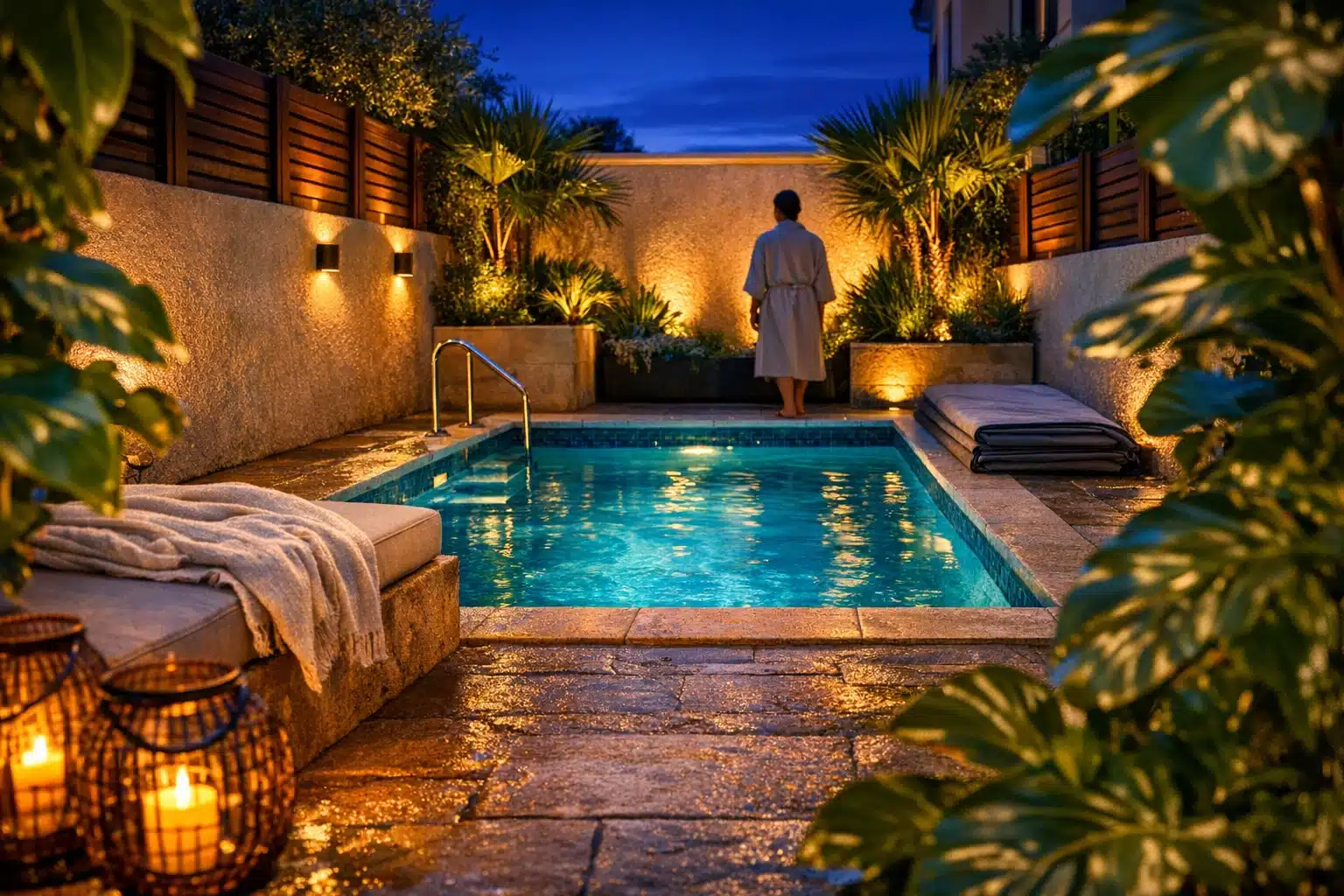
Mini swimming pools are less about portability alone and more about compact design. A mini pool may be portable, semi-permanent, or fixed in place, but its defining trait is efficient use of space. These pools are built for homes where a full-size installation would overwhelm the yard or simply make no sense. In dense neighborhoods, courtyard homes, narrow lots, and smaller patios, the mini pool has become a practical middle ground between “no pool at all” and a costly large-scale project.
What counts as “mini” varies, but the idea is consistent: smaller dimensions, focused use, and often a stronger emphasis on soaking, cooling, or light exercise than on active swimming. Some mini pools resemble compact plunge pools. Others are rigid above-ground tanks, modern small-shell pools, or deck-integrated designs. A few are deep enough for a refreshing dip while using less surface area than a traditional family pool. That smaller size can reduce water use, shorten cleaning time, and lower the visual impact on the property.
Mini pools appeal to adults as much as children. Instead of serving as a broad play zone, they often function as a relaxation feature. Think of them as a small room made of water: not built for long-distance movement, but ideal for cooling off, socializing, hydrotherapy-style soaking, or adding a resort-like note to a compact outdoor setting. In warm climates, that can be enough to make a patio feel transformed.
They also work well in design-conscious homes. Because the footprint is smaller, owners often spend more attention on surroundings such as decking, privacy screens, planters, benches, and covers. A mini pool can therefore become part of a broader outdoor living plan rather than the only feature in the yard. That matters in spaces where every square foot must earn its keep.
- Best for small yards, patios, courtyards, and urban homes.
- Often suited to cooling, lounging, and soaking rather than vigorous swimming.
- Can be easier to integrate with landscaping and seating areas.
There are limitations, of course. A mini pool may not satisfy larger families looking for wide open splash space. Some models also cost more per square foot than buyers expect because compact engineering, stronger shells, insulation, or heating options raise the price. In some cases, local codes or weight considerations still apply, especially on decks or rooftops. Yet despite those limits, mini pools answer a very real need. They prove that a useful, attractive pool does not have to be huge. In many homes, smaller is not a compromise at all; it is the reason the idea works.
Portable Pool or Mini Pool: How to Compare Cost, Space, Comfort, and Daily Use
Choosing between a portable swimming pool and a mini swimming pool becomes easier when you stop looking at labels and start looking at lifestyle. The better question is not “Which one is better?” but “Which one fits the way this household will actually use it?” That shift matters because both categories can overlap. A compact frame pool may be both portable and mini in practice, while a mini plunge pool may be too heavy or structured to move easily. Comparing real-world use is the clearest route to a smart purchase.
Start with space. Portable pools generally need a flat, open area and enough clearance for setup, circulation, and safe entry. They are often wider than expected because soft-sided models spread outward slightly once filled. Mini pools, on the other hand, are usually chosen because space is tight. A small rectangular plunge design can fit in a narrow backyard where a large round portable pool would feel clumsy. If the available area is awkward rather than generous, mini designs often win.
Next comes budget. Basic portable pools are usually the lower-cost entry point. They make sense for seasonal fun, short-term living situations, or cautious first-time buyers. Mini pools can begin affordably in simpler forms, but more polished or semi-permanent versions often cost more because they involve stronger materials, better filtration, integrated steps, insulation, or custom placement. The financial gap widens further if heating, decking, or electrical upgrades are added.
Water use and maintenance deserve equal attention. A larger portable family pool may require several thousand gallons, while a compact mini plunge pool can use far less. Lower volume often means fewer chemicals, less time spent skimming debris, and easier temperature management. Yet portability can make maintenance simpler in another way: some seasonal pools can be drained, dried, and stored rather than maintained year-round.
- Choose a portable pool if you value lower upfront cost, seasonal use, and the option to disassemble or relocate it.
- Choose a mini pool if you value compact design, a more refined outdoor look, and a smaller but more intentional water feature.
- Look closely at water capacity, filtration, ground requirements, and who will use the pool most often.
Comfort is the final tie-breaker. Families with energetic children may prefer the wider play area of a portable frame pool. Adults seeking a quiet retreat may prefer a mini plunge-style setup with seating edges and warmer water. One is often about flexible recreation; the other is often about compact comfort. When you picture the pool in daily life rather than in a catalog, the right option usually becomes much clearer.
Setup, Maintenance, Safety, and Conclusion for Real-World Buyers
Even the most appealing pool can become frustrating if setup and care are treated as afterthoughts. Whether you buy a portable pool or a mini pool, success depends on preparation. The ground must be level, stable, and capable of supporting the full water weight. Since water is heavy, even a modest pool can place thousands of pounds on one area. A sloped surface may not look dramatic to the eye, but once filled, that small tilt can strain seams, distort the frame, and shorten the life of the pool. A good installation begins before the first drop of water enters the liner.
Filtration and sanitation are the next pillars. Small pools still need clean water. Basic systems usually rely on a compact pump and filter, while more advanced mini pools may include stronger circulation or heating options. Leaves, sunscreen residue, dust, and body oils accumulate quickly, especially in warm weather. That means buyers should budget not only for the pool itself, but also for testing supplies, cleaning tools, and replacement filter cartridges if applicable.
- Use a ground cloth or pad where recommended to reduce wear beneath the pool.
- Cover the pool when not in use to limit debris and evaporation.
- Check water chemistry regularly instead of waiting for cloudy water to appear.
- Follow manufacturer guidance for pump run times, maximum fill lines, and winter storage.
Safety deserves the most serious attention of all. Any pool, even a small one, requires supervision around children and non-swimmers. Barriers, ladders that can be removed or secured, and clear household rules are not optional details. Slippery surfaces, electrical connections, and unsupervised access create risk in compact settings just as they do around larger pools. The smaller footprint of a mini pool should never be mistaken for a smaller responsibility.
For the target audience most interested in this topic, the conclusion is encouraging. If you have a modest yard, a limited budget, or a temporary living situation, portable and mini swimming pools offer realistic ways to enjoy water at home without committing to a permanent build. Portable pools are usually the better match for households that want affordable, seasonal fun and the freedom to pack the setup away. Mini pools are often the stronger choice for buyers who want a smaller but more polished space for cooling off, relaxing, and making the most of limited square footage. The smartest purchase is not the biggest or most expensive one. It is the pool that fits your space, your routine, and your willingness to maintain it long after the first hot afternoon has passed.