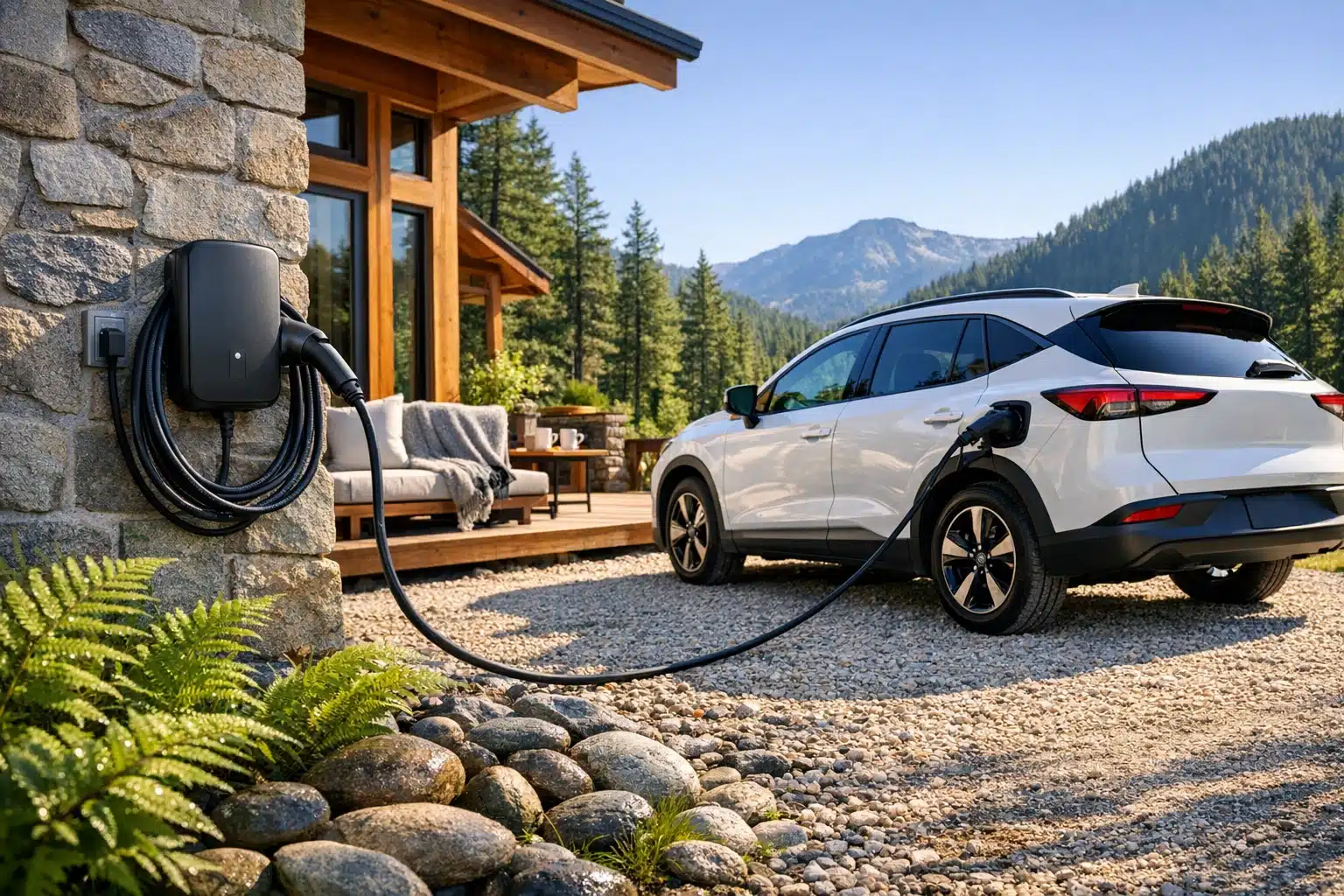
 Artificially generated image
 Portable EV Charger Guide: Mini Electric Vehicle Charger Features
Electric driving gets easier when charging is flexible, because the road does not always lead back to a garage wall box. A portable EV charger can turn a hotel outlet, a workplace socket, or a relative’s driveway into a practical backup plan, while a mini EV charger makes that backup easier to carry. Understanding the wider world of electric vehicle chargers helps buyers avoid slow charging, bad connector matches, and unsafe gear. This guide maps the essentials before you spend money or pack a cable.
Article Outline
1. Portable EV charger fundamentals and why the term often causes confusion.
2. Mini EV charger features, strengths, and trade-offs for travel and daily use.
3. Electric vehicle charger types, power levels, and connector standards that matter most.
4. How to choose the right charger safely, including compatibility, speed, and certification.
5. Real-world ownership tips, cost considerations, maintenance, and future charging trends.
1. Portable EV Charger Fundamentals: What It Is and Why Drivers Buy One
A portable EV charger sounds simple, but the term is slightly misleading. In most cases, the portable unit is technically an EVSE, or electric vehicle supply equipment, rather than the charger itself. The actual charger that converts AC power into the DC energy stored in the battery is built into the vehicle. Still, in everyday language, “portable EV charger” is the phrase most people use, and it usually means a compact cable-and-control-box device that can plug into a household or industrial outlet and deliver AC power safely to the car.
The appeal is easy to understand. A fixed wall charger is convenient at home, yet life is rarely fixed. Portable units help renters, frequent travelers, people with more than one parking location, and drivers who simply want a backup in the trunk. Imagine arriving at a cabin after a longer-than-expected detour, seeing no charging station on the map, and then spotting a usable outlet near the porch. That is where a portable charger stops being a gadget and starts feeling like a quiet insurance policy.
Most portable chargers sit in the Level 1 or Level 2 category. In North America, a Level 1 unit typically uses a standard 120-volt outlet and delivers roughly 1.2 to 1.4 kW, often adding around 3 to 5 miles of range per hour depending on the vehicle. A 240-volt portable Level 2 model can raise output significantly, with common portable ratings around 16 amps or 32 amps. That can mean roughly 3.8 kW to 7.7 kW, enough to add meaningful range overnight for many EVs.
When comparing models, buyers should look beyond the headline power rating. A useful portable charger usually balances several factors:
• Input plug type and outlet compatibility
• Adjustable current settings for older circuits
• Cable length and storage convenience
• Weather resistance for outdoor use
• Clear safety certifications and fault protection
Portable chargers do have limits. They are often slower than hardwired home stations, and they rely heavily on the quality of the outlet they are plugged into. A loose receptacle, damaged wiring, or underrated circuit can create heat and reliability problems. For that reason, portable charging works best when treated as a flexible tool rather than a magical answer to every charging need. Used correctly, it gives EV ownership something every driver values: options.
2. Mini EV Charger Features: Small Size, Big Convenience, and Real Trade-Offs
A mini EV charger is essentially the travel-light interpretation of the portable charger. The goal is straightforward: shrink the control box, reduce cable bulk, simplify storage, and make the whole package easier to carry in a backpack, side compartment, or underfloor trunk tray. For city drivers and frequent travelers, that smaller footprint can be surprisingly valuable. Not everyone wants a thick coil of cable wrestling for space with groceries, luggage, or a stroller.
Mini designs often focus on practicality over maximum output. Some are built for standard household charging only, while others support dual-voltage use with interchangeable plugs or adapters. Many mini units also use simpler displays, fewer buttons, and lighter cable jackets. This can make them feel less intimidating for new EV owners. Instead of looking like industrial equipment, they resemble a neat travel accessory. That softer learning curve matters when a buyer is still figuring out sockets, amperage, and charging times.
The advantages become clearer in everyday situations. A mini charger works well for:
• Apartment residents who cannot install a wall unit
• Drivers who top up at family homes or vacation rentals
• Fleet users who move between locations
• People who want an emergency charging option without carrying heavy gear
However, smaller does not always mean better. Mini chargers may use thinner cables, shorter leads, or lower current limits to keep size and weight under control. That can translate into slower charging, especially if the unit is restricted to 10 or 12 amps on a standard outlet. Thermal management can also be more challenging in compact electronics, so quality matters a great deal. A good mini charger should still include temperature monitoring, overcurrent protection, and durable connectors that can survive repeated plugging and unplugging.
There is also a usability question. A larger portable charger may be easier to handle with gloves, offer a better display, or include stronger weather sealing for outdoor charging. In other words, the mini version wins on convenience, but the bigger unit may win on comfort and versatility. Buyers should think about how often the charger will be used. If it lives in the trunk for emergencies, mini is attractive. If it will serve as a regular daily charger, a slightly larger and more capable portable unit may be the wiser choice. Small can be smart, but only when the compromises fit the routine.
3. Electric Vehicle Charger Basics: Levels, Connectors, and Charging Speed
To choose any EV charger well, it helps to see the bigger landscape. Electric vehicle chargers generally fall into three familiar groups: Level 1, Level 2, and DC fast charging. Level 1 is the slowest and usually relies on a standard household outlet. Level 2 uses higher-voltage AC power and is the common choice for homes, workplaces, hotels, and destination charging sites. DC fast charging is the highway specialist, designed for rapid energy delivery during longer trips. Portable and mini chargers live almost entirely in the AC world, not the DC fast-charging world.
Power levels matter because charging time is just stored energy divided by charging speed, with a little overhead. A practical example makes the point clearer. If an EV needs about 36 kWh to move from 20 percent to 80 percent on a 60 kWh battery, a 1.4 kW Level 1 charge could take roughly a full day or a bit more. A 7.2 kW Level 2 unit could do the same job in around five to six hours under favorable conditions. Real charging rates vary because vehicles limit speed based on battery temperature, onboard charger capacity, and state of charge, but the broad lesson is simple: voltage and amperage shape your schedule.
Connector standards also deserve attention. In North America, J1772 has long been the standard for AC charging on many EVs, while NACS is becoming increasingly important as more manufacturers adopt Tesla’s connector design. In Europe, Type 2 is the common AC standard. DC fast charging often uses CCS, while CHAdeMO remains present on a shrinking number of older vehicles in some markets. A portable charger must match the vehicle inlet directly or through a properly rated, legitimate adapter where appropriate. Guesswork here is expensive and frustrating.
Charging setup choices usually break down like this:
• Level 1: lowest cost, easiest access, slowest recovery
• Portable Level 2: more flexible, faster, useful for travel and backup
• Fixed wall charger: strongest everyday convenience for home charging
• DC fast charging: fastest on the road, not a portable home solution
Smart features add another layer. Some chargers include app control, scheduled charging, energy tracking, RFID access, or load management. Those extras are helpful, but not every driver needs them. For many households, the real priority is more basic: a charger that is safe, compatible, and fast enough to fit the daily rhythm of commuting, errands, and unexpected detours. The smartest charger is not always the one with the most features; often it is the one that solves the right problem with the least drama.
4. How to Choose the Right Charger: Compatibility, Safety, and Practical Math
Buying an EV charger gets much easier once you stop shopping by marketing language alone. Start with compatibility. The charger must match the car’s connector standard, the available outlet, and the electrical capacity of the location where it will be used. A 32-amp portable unit is not useful if the only dependable outlet on hand supports a much lower load. Likewise, a dual-voltage charger is valuable only if the included plugs and the household wiring actually allow safe use at both voltage levels.
Safety should be the next filter, not an afterthought. Look for clear protection features such as overcurrent protection, ground fault protection, temperature monitoring, and automatic shutoff if a fault is detected. Buyers should also check for certification from a recognized testing body in their market, such as UL or ETL in the United States and Canada, or equivalent recognized compliance pathways elsewhere. Reputable sellers provide complete documentation, transparent specifications, and realistic performance claims. A suspiciously cheap charger that promises high power from a basic outlet is not a bargain; it is a warning sign in plastic housing.
A few practical checkpoints help narrow the field:
• Choose adjustable amperage if you may charge on older or shared circuits
• Prefer durable connectors with solid strain relief at both cable ends
• Check the cable length, because convenience drops fast when the car parks farther away than expected
• Confirm the enclosure is suitable for outdoor conditions if rain, dust, or snow are part of daily life
• Be careful with adapters, extension cords, and unknown outlets
Charging-time math is also worth learning. Suppose your vehicle consumes around 3 to 4 miles per kWh. A 1.4 kW charger may add roughly 4 to 6 kWh during an overnight stay of several hours, which can be enough for short daily driving but not ideal for heavy use. A 7 kW class charger can add several times more energy in the same window. This is why many drivers keep a portable charger for flexibility but still prefer a fixed Level 2 setup at home if they have the option.
The best choice depends on routine. If you commute lightly, park for long periods, and want a backup for unpredictable stops, a mini or basic portable charger may be perfect. If you drive longer distances or depend on overnight recovery, a more capable Level 2 unit becomes easier to justify. Good charger selection is less about chasing the biggest number and more about matching power, place, and habit without compromising safety.
5. Ownership, Costs, Maintenance, and the Future of Portable Charging
Once the charger is purchased, the story shifts from specifications to ownership. Portable EV chargers often cost less than fully installed wall units because they avoid electrician labor in many cases, though the actual range varies widely based on brand, power level, and smart features. A basic travel charger may sit in a lower price band, while premium portable units with stronger weather sealing, interchangeable plugs, and app controls can cost substantially more. Still, the charger itself is only part of the ownership picture. The real operating cost is the electricity used, not the cable in the trunk.
Maintenance is usually simple, but it should be regular. Inspect the plug blades and connector pins for discoloration, dirt, or unusual heat marks. Check the cable jacket for cuts, crushing, or stiffness caused by age and weather. Avoid tightly bending the cable near the strain relief, because that is where fatigue tends to build up first. If a charger repeatedly trips, feels hotter than normal, or shows fault codes, it deserves investigation before the next session. Charging equipment is supposed to be boring in the best possible way. When it starts behaving dramatically, that is your cue to stop and look closer.
Smart ownership habits can extend the life of both the charger and the outlet:
• Keep connectors dry and capped when not in use
• Store the cable loosely instead of forcing sharp coils
• Plug directly into a properly rated outlet whenever possible
• Avoid using worn receptacles for repeated high-load charging
• Test new charging locations cautiously before relying on them overnight
Looking ahead, portable charging is likely to get better in two directions at once: smaller and smarter. Electronics continue to shrink, connector ecosystems are evolving, and more vehicles are supporting broader charging access through adapters and new standards. In North America, the growing move toward NACS is reshaping buying decisions, while software-based features such as charging schedules, energy logs, and remote monitoring are becoming more common even on mobile units. Over time, buyers can expect lighter designs, improved thermal control, and better user feedback rather than miraculous leaps in physics.
For most drivers, the future does not require waiting. The useful question today is simple: what charging setup keeps your car ready with the least friction? If a portable or mini charger fills that role, it can be one of the most practical accessories an EV owner buys. Quietly, day after day, it turns uncertainty into routine.
Conclusion for Everyday EV Drivers
If you are choosing between a portable EV charger, a mini EV charger, and a more permanent electric vehicle charger setup, the right answer depends on where you park, how far you drive, and how much flexibility you need. Portable units shine as backup tools and travel companions, while mini chargers appeal to drivers who value low bulk and easy storage. Fixed home charging remains the most convenient daily option for many households, but it is not the only smart path. The best setup is the one that is safe, compatible, and powerful enough for your routine without adding complexity you will never use.