Best Mini Power Tiller: A Practical Buying Guide
Introduction and Article Outline: Why Mini Power Tillers Matter
Choosing a compact tiller is less about chasing the highest output and more about matching the tool to the beds, borders, or rows you genuinely maintain. A nimble machine can feel effortless in loose garden soil yet underwhelming in dense clay, while a bulkier option may seem unnecessary for routine cultivation. That is why mini power tillers reward careful shopping. The right pick saves labor, improves soil preparation, and stays easy to store between seasons.
Mini tillers occupy a useful corner of the garden tool market. They are built for homeowners, hobby growers, and community gardeners who need more muscle than a hand fork can offer but do not want the size, weight, noise, or storage demands of a large rear-tine tiller. Many mini models work in a width range of roughly 6 to 16 inches and till to depths of about 4 to 10 inches, which makes them especially practical for raised beds, small vegetable patches, greenhouse rows, and established plots that are refreshed every season. They can loosen the top layer of soil, blend in compost, prepare seedbeds, and disturb small weeds before they take hold.
They also come with limits, and those limits are important. A mini power tiller is not the ideal tool for breaking untouched sod, ripping through thick roots, or reclaiming a long-neglected area filled with stones. In other words, the best mini tiller is not necessarily the strongest one on paper. It is the machine that matches your soil, your strength, your storage space, and your actual gardening pattern. Soil, after all, has a personality: sandy ground gives way politely, while compacted clay often negotiates from a position of power.
This guide is organized to help you make that match with fewer surprises and better expectations.
- Section 1 explains why mini tillers are relevant and outlines the topics that matter when comparing them.
- Section 2 compares the main types, including corded electric, battery-powered, and gas mini tillers.
- Section 3 breaks down the features that most strongly affect real-world performance and comfort.
- Section 4 shows how to match a tiller to soil type, garden size, and the jobs you actually need done.
- Section 5 covers budget, maintenance, ownership costs, and a practical conclusion for different buyers.
If you are trying to find the best mini power tiller, this structure will help you avoid a common mistake: buying according to advertising language rather than gardening reality. A compact tiller can be one of the most satisfying tools in the shed, but only when its capabilities line up with the ground beneath your feet.
Mini Power Tiller Types Compared: Corded, Battery, and Gas
The phrase mini power tiller sounds straightforward, yet the category contains several very different machines. The main choices are corded electric units, battery-powered units, and gas-powered machines. Some products are marketed as cultivators rather than tillers, and that distinction matters because a cultivator is usually intended for lighter work such as loosening already-worked soil, mixing compost into the top layer, or weeding between rows. A true mini tiller may still be compact, but it is typically better equipped for deeper soil preparation and more demanding ground conditions.
Corded electric mini tillers are often the lightest and most affordable place to start. Many fall in the range of about 8 to 13.5 amps, and they are appealing for modest gardens close to a power outlet. They tend to start instantly, require little maintenance, and avoid fuel storage concerns. Their main drawback is the cord itself. Extension management can become tedious around beds, pathways, and corners, and power is only useful as long as your reach allows. For gardeners with a small backyard plot, though, a corded machine can be a sensible and economical choice.
Battery-powered mini tillers have become more competitive as cordless garden tools improve. Their great advantage is freedom of movement. You can reach a greenhouse bed, a fenced corner, or a community garden plot without dragging a cord behind you. Depending on battery size, soil resistance, and machine design, runtime can vary widely, so buyers should look beyond voltage numbers and consider battery capacity and whether the battery platform fits other tools they own. Cordless units can be especially attractive for people who value convenience and already use a compatible mower, trimmer, or blower system.
Gas-powered mini tillers remain relevant because they often offer stronger performance in tough ground and longer uninterrupted use. Small engines in this class may range from roughly 25cc to 80cc, depending on design and purpose. They are well suited to heavier soil, larger small-garden spaces, and repeated seasonal use where extension cords or batteries are impractical. The trade-off is obvious: more noise, more weight, more vibration, regular engine maintenance, and the need to handle fuel responsibly.
- Corded electric models are usually easiest on budget and maintenance.
- Battery-powered models excel in convenience and maneuverability.
- Gas-powered machines are generally best for stubborn soil and longer sessions.
- Light cultivators are ideal for upkeep, while stronger mini tillers are better for initial bed prep.
The best mini tiller type depends on where and how you garden. If your plot is tidy, close to power, and already worked each year, electric options often make sense. If your soil is denser, your space is larger, or your ground challenges every tool you own, gas can still be the practical answer. The label matters less than the job description you give the machine before buying it.
What Makes the Best Mini Tiller: Features That Truly Affect Performance
Once you decide on a power source, the next step is separating meaningful features from marketing noise. The best mini tiller is usually defined by a handful of practical details: tine design, tilling width and depth, weight, balance, handle comfort, transport options, and serviceability. A compact machine may look similar to another on a product page, yet feel completely different after twenty minutes in real soil.
Tines do the core work, so their shape and configuration deserve close attention. Curved tines can bite aggressively, while lighter-duty setups may be better for already-loose soil. Some machines allow you to remove outer tines to narrow the tilling path, which is useful when moving from open ground to a raised bed or between crop rows. Working width matters because it changes both speed and control. A wider machine can prepare a bed faster, but it may become awkward in tight spaces. Depth matters for seedbed preparation, compost incorporation, and root-zone improvement, yet manufacturers often quote maximum depth under ideal conditions, not in hard-packed ground.
Weight is one of the most misunderstood specifications. A very light tiller is easier to lift, carry, and store, which is a huge advantage for many users. At the same time, a machine with too little weight may bounce on firm soil rather than dig effectively. Heavier units can hold the ground better, but they demand more effort when turning, transporting, or pulling from storage. Balance is just as important as raw weight, because a well-balanced machine often feels less tiring than a poorly distributed lighter one.
Comfort and control deserve more attention than shoppers often give them. Foldable handles help with storage. Soft grips can reduce fatigue. A good wheel set or transport handle makes a real difference if the tiller needs to move across a driveway, through a gate, or into a shed. On battery models, tool-free battery changes and clear charge indicators improve the experience. On gas units, accessible air filters, fuel shutoff options, and straightforward starting procedures can save frustration over time.
- Check whether the tilling width can be adjusted.
- Look for realistic depth claims, not just the largest number on the box.
- Compare weight with your own lifting comfort, not only with soil demands.
- Review replacement part availability, warranty length, and local service support.
- Consider noise, vibration, storage size, and startup simplicity.
A final point matters more than many first-time buyers expect: after-sales practicality. A great mini power tiller is not only powerful on day one; it is also easy to maintain in year three. Read the manual before purchase if possible, check whether replacement tines and wear parts are easy to obtain, and pay attention to how the machine is assembled. Garden tools live rough lives. Dirt, moisture, impacts, and seasonal neglect test every design. The best choice is often the one that stays dependable without demanding heroic patience from its owner.
How to Match a Mini Power Tiller to Soil Type, Garden Size, and Real Jobs
The smartest way to shop for a mini power tiller is to picture the exact ground it will face. Garden size matters, but soil condition matters even more. A compact tiller that performs beautifully in a prepared raised bed may struggle in clay that has not been loosened for years. On the other hand, a stronger and heavier machine may be entirely unnecessary if your usual task is simply turning in compost each spring and keeping the top few inches friable.
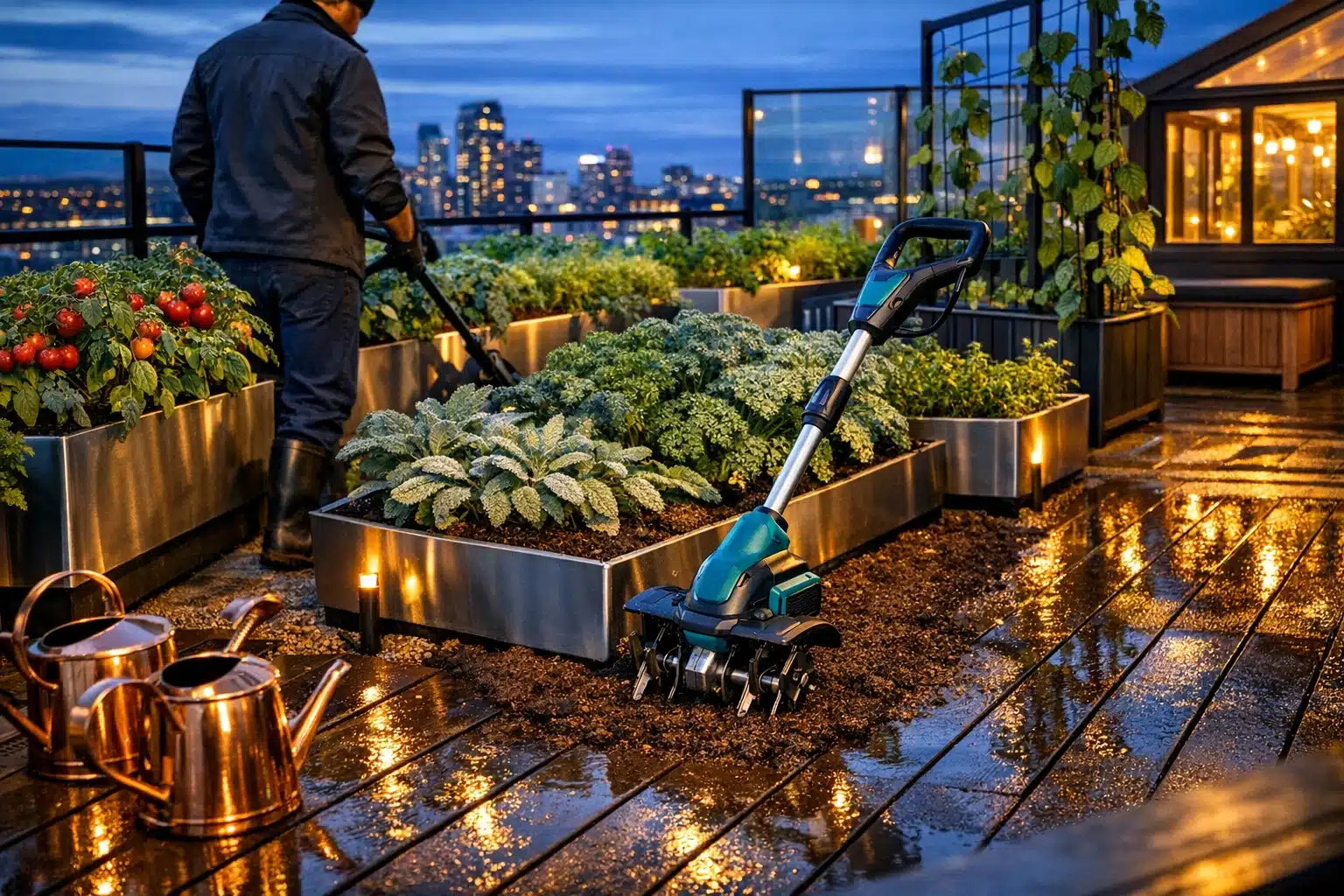
For raised beds, ornamental borders, and narrow vegetable rows, lighter electric or battery-powered models are often the best fit. These spaces reward precision and maneuverability over brute force. You may need to work close to edging, irrigation lines, or established plants, and a compact footprint becomes a clear advantage. If the bed soil is already amended and relatively loose, a smaller machine can prepare it quickly without feeling unruly. In this situation, an adjustable width feature is especially useful, because it lets you work around the shapes that small gardens naturally create.
For a modest in-ground vegetable patch, perhaps a few hundred square feet, the best mini tiller is usually one with enough weight and tine strength to loosen soil consistently while still remaining easy to guide. This is where many mid-range battery and gas models stand out. They can prepare seasonal planting areas, mix in compost, and handle repetitive work without demanding the storage or transport compromises of a large tiller. If your plot is larger or farther from power, the practical value of gas rises quickly. If your garden is near the house and already structured into beds, electric convenience may win instead.
Hard soil changes the decision dramatically. Dense clay, stony ground, and neglected patches ask more from both the machine and the operator. A mini tiller can help, but expectations need to stay realistic. In compacted soil, several shallower passes are usually more effective than trying to force maximum depth immediately. Slightly moist soil often tills better than bone-dry earth, though soggy ground should still be avoided because it clumps and smears rather than crumbles. For the toughest conditions, a gas mini tiller or even a larger machine rental may be the smarter plan.
- Choose light and agile models for raised beds and close-quarters work.
- Choose mid-range power for routine vegetable garden preparation.
- Choose stronger machines for dense soil, but expect to work in stages.
- Choose cultivator-style tools for maintenance, not for major ground breaking.
Think about the job calendar, too. If you will use the machine four or five times each season for shallow cultivation, comfort and quick startup become decisive. If you will use it heavily in spring and barely touch it afterward, raw capability may matter more than refinement. The best mini tiller is not chosen in a vacuum. It is chosen in conversation with your soil, your schedule, and the physical effort you are willing to spend each time the weeds start making plans of their own.
Budget, Maintenance, and Final Buying Advice for Small-Garden Owners
Price matters, but value matters more. In broad terms, corded electric mini tillers often sit at the most affordable end of the range, battery-powered units commonly cost more because of the battery and charger ecosystem, and gas-powered machines tend to command higher prices due to engine components and heavier construction. A rough market snapshot often places entry-level corded options around the low hundreds of dollars, battery models higher depending on whether the kit includes batteries, and gas units beyond that, especially if they are designed for tougher soil. Those ranges shift by brand and season, yet the pattern remains consistent: convenience, power, and durability each add cost in different ways.
Ownership costs should be part of the calculation from the beginning. Electric machines generally ask for the least routine care, although extension cords, storage conditions, and occasional tine replacement still matter. Battery tools bring the added question of long-term battery replacement cost, which can be worthwhile if you already share batteries across multiple garden tools. Gas machines may offer the most stubborn-soil confidence, but they also ask for fuel management, spark plug checks, air filter service, and periodic carburetor attention if stored poorly. There is no universally cheaper category in every situation; there is only the category that fits your habits with the fewest hidden headaches.
Safe use and maintenance are not glamorous topics, but they protect both the machine and the person behind it. Wear sturdy shoes, eye protection, and close-fitting clothing. Clear the area of stones, wire, and sticks before starting. Let the tines stop completely before moving or inspecting the machine. After each session, brush off soil, check fasteners, and look for wrapped roots or grass around the tine shaft. For gas models, stabilize fuel if the machine will sit for a long period. For battery models, store batteries according to manufacturer guidance rather than leaving them in harsh heat or freezing conditions.
If you are ready to buy, keep your final checklist practical:
- Match the machine to your hardest likely soil, not your easiest bed.
- Lift it, turn it, and imagine storing it before judging its convenience.
- Check parts, warranty, and service access before chasing flashy specs.
- Do not pay for more size and power than your garden actually needs.
For the typical homeowner with raised beds, flower borders, or a compact vegetable patch, the best mini power tiller is usually one that starts easily, handles predictably, and does not become a burden to store or maintain. For growers facing heavier soil or a larger small plot, stepping up to a sturdier battery or gas model can be worth every extra pound and dollar. The real win is not owning the most impressive machine in the catalog. It is owning the one that turns spring preparation from a dreaded chore into a manageable, repeatable routine that leaves you more energy for planting, watering, and enjoying the garden you worked to build.